

Ninewin casino Plinko
Introduction
I have reviewed a large number of instant-win formats, crash-style products and traditional reels over the years, and Plinko remains one of the most deceptive in the best and worst sense of that word. At first glance, Ninewin casino Plinko looks almost too simple to analyse: you set a stake, choose a risk level, drop a ball and watch it bounce through a field of pegs until it lands in a payout slot. That is the whole visual idea. Yet in practice, the experience is more layered than many players expect.
This is exactly why the format deserves a proper breakdown. Plinko is not a slot in the classic sense, and it does not behave like roulette, blackjack or crash games review either. Its appeal comes from a combination of visible randomness, fast rounds and a payout structure that can feel calm or brutal depending on the settings. On Ninewin casino, that matters because the game can look approachable to a newcomer while still carrying a level of variance that is easy to underestimate.
What I want to do here is separate the surface from the reality. I will explain how Nine win casino Plinko works, why the pace feels so different from reel-based products, where the main risks actually sit and what kind of player is likely to enjoy it. If you are trying to decide whether Plinko is worth your time, this is the practical part you need to understand before pressing drop.
What Plinko is and why it attracts so much attention
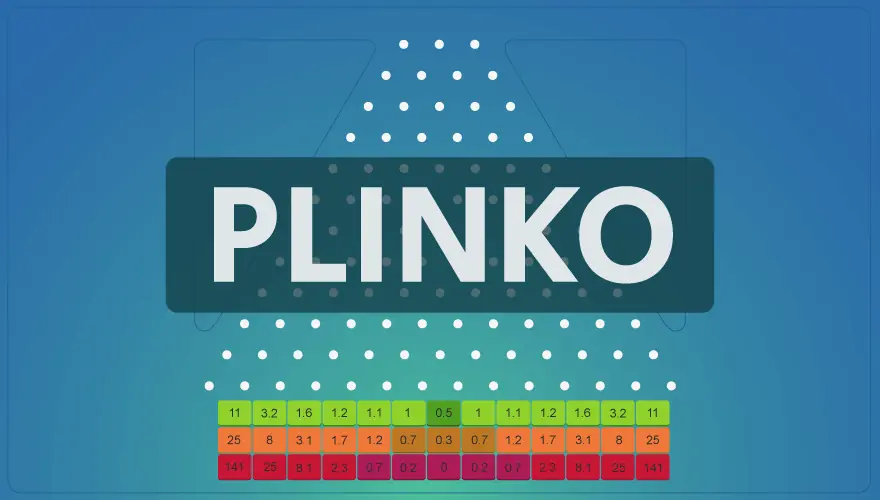
Plinko is a ball-drop casino game built around a simple visual chain of events. A ball is released from the top of a vertical board filled with pins. As it hits each peg, it deflects left or right until it reaches the bottom row, where a series of multiplier pockets determines the return for that round. The concept is easy to grasp in seconds, and that accessibility is one of the main reasons the format has become so visible across modern gambling platforms.
But the real hook is not simplicity alone. Plinko creates a very specific kind of tension. In a slot, the result is effectively decided when the spin starts, yet the player watches symbols stop one by one. In Plinko, the path of the ball gives the impression of a result being shaped in real time. That visual journey is powerful. Even when the mathematics are fixed behind the scenes, the movement creates a stronger emotional connection to each round.
I have noticed that many players are drawn to Plinko for three practical reasons:
Instant readability. You do not need to learn paylines, bonus symbols or side features before you begin.
Visible suspense. The ball can drift toward a high multiplier and then bounce away at the last moment, which creates a memorable near-miss effect.
Control over session style. Risk settings and board options can make the same game feel either relatively steady or sharply swing-driven.
That last point is where Ninewin casino Plinko becomes more than a novelty. The design is minimal, but the way players configure the round structure changes the entire character of the session. A low-risk setup can produce frequent small returns and a flatter bankroll curve. A high-risk setup can generate long dry spells interrupted by occasional large multipliers. The interface remains simple, yet the user experience changes dramatically.
One observation that often gets missed is this: Plinko borrows the visual language of a casual physics toy, but the bankroll behaviour can resemble a high-variance gambling product. That contrast is a big part of its appeal and one of the reasons it deserves caution.
How the core Plinko mechanic actually works
To understand Ninewin casino Plinko properly, it helps to break the round into its basic components. The player chooses a stake, selects a risk level and, in many versions, picks the number of rows. Once the ball is released, it travels through the peg grid and lands in one of the bottom slots, each tied to a multiplier. Your return equals your stake multiplied by the value of the final slot.
From a player perspective, the movement looks organic. The ball clips a peg, shifts direction, drops again, hits another peg and continues until it reaches the bottom. The important thing to understand is that this visual path is not the same thing as player influence. You are watching randomness unfold, not steering it.
There are three structural elements that matter most:
| Element | What it does | Why it matters in practice |
|---|---|---|
| Rows | Increase the number of bounce decisions before the ball reaches the bottom | More rows usually mean a wider distribution of possible outcomes and a different probability balance across payout slots |
| Risk level | Changes how the multiplier map is arranged | Higher risk often means rarer large returns and more frequent low-end results |
| Stake size | Sets the monetary value of every result | Fast rounds can magnify the effect of oversizing bets during losing sequences |
The bottom row is where the real logic of the game reveals itself. Central slots tend to be hit more often, while edge slots usually carry the largest multipliers and are much less likely to land. This is not unique to Nine win casino Plinko; it is a defining part of the format. The board visually suggests endless possibility, but the probability curve is not evenly spread. Most outcomes cluster closer to the middle, and the most eye-catching values sit where the ball reaches less often.
That is the first practical lesson for any player: do not judge Plinko by the biggest number shown on the board. Judge it by how often the game returns something useful relative to how many rounds you can play in a short time.
Why the session pace feels so different in real play
Plinko has one of the fastest and cleanest rhythms in online gambling. There are no reel animations to wait through, no decision trees, no bonus rounds to trigger and no table-game pauses while other participants act. You drop, watch, resolve and repeat. This creates a fluid loop that many players find highly engaging.
On Ninewin casino, that speed is part of the game’s attraction, but it also changes how losses and gains are perceived. A slot can feel slower because each spin has more visual clutter. Plinko strips away that clutter. The result is that bankroll movement becomes easier to track in real time, yet paradoxically easier to underestimate because each individual round looks so lightweight.
I would put it this way: Plinko is one of those formats where the emotional tempo can outrun the financial tempo. The rounds are short, the interface is clean and the action feels frictionless. That can be enjoyable, but it can also lead players to take far more attempts than they originally intended.
This is where risk settings become crucial. A low-risk session often creates a smoother rhythm with regular small returns. That can give the impression that the game is stable. A high-risk session feels very different. You may see many low multipliers in a row, followed by a sudden spike that changes the overall result. The same board, the same ball-drop concept and the same visual style can therefore produce two almost opposite psychological experiences.
A second useful observation: Plinko often feels more interactive than it really is, simply because the ball’s path is visible. That visual transparency is enjoyable, but it should not be mistaken for strategic depth. The excitement comes from observing distribution, not from mastering it.
Understanding probability, variance and expected outcomes
If there is one section a player should not skip, it is this one. Plinko is easy to launch and easy to misunderstand. The central issue is probability distribution. Because the ball can bounce left or right at each peg, the overall result forms a pattern where central outcomes occur more often and extreme outcomes occur less often. This means the largest multipliers are usually the least frequent.
In practical terms, Ninewin casino Plinko can deliver very different bankroll curves depending on your setup. Low-risk modes usually compress the payout range. You are less likely to see dramatic top-end hits, but you may also avoid the harshest losing stretches. High-risk modes stretch the range. They make room for eye-catching multipliers, but they typically do so by increasing the number of weak results.
That has several consequences:
Short sessions can be misleading. A quick run may look generous or punishing without telling you much about the longer statistical pattern.
Big multipliers are not a baseline expectation. They are the exception built into the attraction of the format.
Bet sizing matters more than many players think. In a fast game, a stake that feels small per round can still drain a balance quickly over dozens of drops.
Players often ask whether Plinko is beatable through timing, release patterns or observation of previous drops. The practical answer is no. Each round should be treated as an independent event governed by the game’s maths and settings. Watching a sequence of low-end results does not mean a high multiplier is “due”. That is a classic trap in any chance-based product, and Plinko’s visual design can make that trap feel more convincing than it really is.
The table below shows how different settings typically change the feel of the session.
| Session style | Typical feel | Main trade-off |
|---|---|---|
| Low risk | More frequent modest returns, calmer bankroll swings | Lower chance of standout multipliers |
| Medium risk | Balanced rhythm with visible ups and downs | No guarantee of either stability or major spikes |
| High risk | Longer dry spells with occasional sharp jumps | Can become expensive quickly if expectations are unrealistic |
The practical takeaway is straightforward: Plinko is not just a ball-drop toy with random outcomes. It is a variance-driven product where your chosen setup largely determines whether the session feels controlled, frustrating or explosive.
How Plinko compares with slots and other casino games
One reason Ninewin casino Plinko stands out is that it sits in an unusual middle ground. It is not a traditional slot because there are no reels, paylines, scatters or bonus rounds in the classic sense. It is not a table game because there is no strategic decision-making after the round begins. It is not quite a crash game either, even though it shares the short-round, high-tempo appeal that many crash players enjoy.
Compared with slots, Plinko is more transparent in one important way: the route from action to outcome is visually direct. You can see the ball descend and you can see the multiplier pockets waiting at the bottom. There is less thematic packaging and less decorative noise. For some players, that makes the experience feel cleaner and more honest. For others, it makes the game feel too bare.
Compared with roulette checks before using Ninewin Casino, Plinko offers a stronger sense of motion and anticipation during each round. Compared with blackjack, it offers almost no strategic depth. Compared with crash products, it removes the cash-out decision and replaces it with a fixed endpoint. This means the tension is observational rather than tactical.
That distinction matters. Players who enjoy shaping outcomes through decisions may find Plinko too passive after the novelty wears off. Players who want immediate, readable action without learning a ruleset often respond to it much more positively.
In my view, the biggest difference from classic slots is emotional structure. Slots often build anticipation through feature triggers and layered symbol interactions. Plinko builds anticipation through trajectory. You are not waiting for a bonus to unlock. You are watching a path narrow toward a result. That sounds like a small difference, but it changes the entire feel of the session.
Where the game performs well and where its limits show
Plinko has clear strengths, and I think it is more useful to discuss them in practical terms than in promotional language. First, the format is highly accessible. A newcomer can understand the round flow almost instantly. Second, the game is efficient. If you want a fast session without long explanations or cluttered interfaces, Plinko delivers that better than many reel-based products. Third, the risk configuration gives players a real way to shape the tone of the session, even if it does not create strategic control over outcomes.
Those strengths are real, but so are the limitations. The biggest one is repetition. Because the loop is so simple, some players lose interest quickly if they prefer evolving features, narrative themes or bonus variety. Another issue is expectation distortion. The board often displays large multipliers prominently, which can pull attention toward rare outcomes instead of typical ones. That visual emphasis is exciting, but it can encourage unrealistic assumptions about what a normal session looks like.
I would summarise the practical balance like this:
Strong point: easy to understand and quick to play.
Strong point: risk settings noticeably affect the session style.
Strong point: clear visual suspense with little interface friction.
Weak point: limited depth for players who want strategic input.
Weak point: high-risk modes can produce punishing sequences.
Weak point: the simplicity that attracts some players can feel shallow to others.
A third observation worth remembering: Plinko is one of the few casino formats where the entertainment value and the statistical harshness can rise at the same time. The more dramatic the board looks, the more careful a player usually needs to be.
Who Plinko suits best and who may prefer another format
Not every gambling product fits every player profile, and Ninewin casino Plinko is a good example of that. In my experience, it suits players who value speed, clean presentation and immediate feedback. If you enjoy watching outcomes unfold without having to process many symbols, rules or side options, Plinko can be a very comfortable fit. It also works well for players who like to define the mood of a session through risk selection rather than through choosing between dozens of unrelated Ninewin Casino games for real money players.
It may be less suitable for players who want deep involvement in each round. If your ideal session includes strategic choices, bonus hunts, progressive structure or a stronger thematic layer, Plinko can start to feel one-dimensional. The same applies to players who are highly sensitive to variance but are tempted by the highest visible multipliers. In that case, the game can create a mismatch between expectation and tolerance.
As a simple guide:
Plinko is a good fit for players who want fast rounds and straightforward rules.
It suits those who understand that rare top-end results are not standard outcomes.
It can work for short, controlled sessions where stake discipline is clear from the start.
It is less suitable for players who need strategic agency during play.
It is also a weaker match for anyone who gets bored with repetitive loops quickly.
This is why I always suggest judging Plinko by temperament rather than hype. The format is not universally appealing, and that is perfectly fine. Its value depends heavily on how you like to experience chance-based play.
What to check before launching Ninewin casino Plinko
Before starting a session, there are a few things I would always recommend reviewing. These are not cosmetic details; they directly affect how the session behaves and how the results feel over time.
Look at the risk setting first. Do not treat it as a small preference toggle. It changes the distribution profile and therefore the entire character of the session.
Check the available multiplier spread. Large edge values may be attractive, but what matters is how the rest of the board is structured around them.
Set a realistic stake for the game’s speed. Fast rounds can create more exposure than players expect. To understand the wagering rules behind each offer, open coupons checklist next.
Use demo play if available. A short test run can reveal whether the pace and payout rhythm suit your style before real-money play begins.
Decide what kind of session you want. If you want steadier entertainment, a lower-risk setup usually makes more sense than chasing the most dramatic board.
These checks matter because Plinko’s interface can be misleadingly calm. There are few distractions, few settings and little visual complexity. That often creates the impression that there is not much to think about. In reality, most of the important decisions happen before the first ball drops.
Final verdict
Ninewin casino Plinko offers a very specific kind of gambling experience: fast, visual, easy to enter and heavily shaped by variance. Its strength lies in clarity. You know what is happening, you see the path to the result and you can adjust the session tone through risk settings without learning a complicated ruleset. For players who want clean, high-tempo action, that is a genuine advantage.
At the same time, the format asks for more caution than its toy-like appearance suggests. The simple interface can hide sharp bankroll swings, especially in higher-risk modes. The biggest multipliers are part of the attraction, but they should be treated as rare outcomes, not as a realistic target for every short session. That is the key point many players need to understand before trying Nine win casino Plinko.
If you enjoy straightforward chance-based play, visible suspense and short rounds, Plinko can be a strong fit. If you prefer layered slot features, tactical input or slower decision-making, another format will probably suit you better. In the end, Plinko does not promise depth through complexity. It offers tension through trajectory, speed and distribution. For the right player, that is more than enough. For the wrong one, the novelty can fade quickly.
FAQ
How does Plinko work on the Ninewin online casino lobby?
A ball is released from the top and drops through numbered lanes. Each lane corresponds to a different multiplier based on where the ball lands. The result is settled instantly after the landing, following the round rules shown on-screen.
What do the multipliers mean in Plinko rounds?
Multipliers determine how much the round return is based on the stake. If the ball lands in a higher-value zone, the multiplier increases accordingly. The exact multiplier mapping is displayed in the game layout before the round starts.
What happens if a Plinko round is interrupted due to a connection issue?
When the connection is unstable, the game may pause or fail to load the next drop. Closing the tab or refreshing during a live round can lead to delayed reconciliation. Restart the game and wait for the balance update before starting a new round.